

Gearbox Vibration Sensor: How It Detects Early Signs of Gearbox Failure
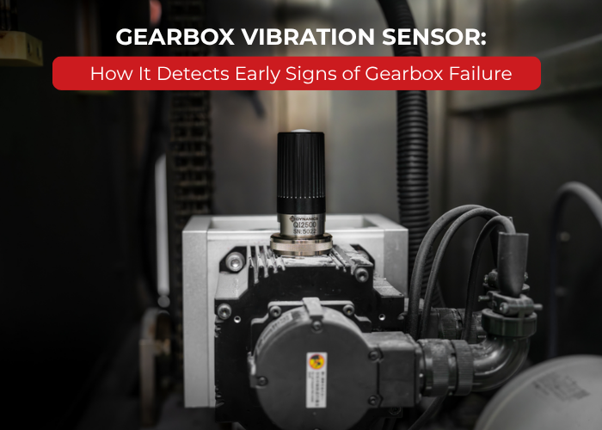
A gearbox vibration sensor can find small changes in a machine before a major problem develops. It checks vibration, acceleration, frequency, and temperature. By comparing new readings with normal machine behavior, maintenance teams can spot changes, study the cause, and plan the right maintenance work.
How Gearbox Vibration Reveals Early Mechanical Problems
A gearbox can show signs of trouble through changes in its normal movement. Worn parts, poor alignment, loose parts, and gear problems can change the way a gearbox vibrates. The important point is to watch the pattern over time. One reading gives only a quick look. Repeated readings show whether the machine is staying steady or changing.
For example, rising vibration can point to a developing mechanical issue. A change in frequency can also give clues about what is happening inside the gearbox. Temperature adds another useful check.
What a Gearbox Vibration Sensor Measures
A vibration monitoring sensor collects several readings from the same machine. The QI2500 measures:
- Vibration velocity up to 375 mm/s RMS
- Acceleration up to 60g
- Dominant frequencies
- Temperature
The sensor uses a three-axis MEMS accelerometer. This lets it capture vibration in three directions. It also supports frequencies from 0 to 16,000 Hz, with up to 4,096 lines per axis. These readings give maintenance teams more detail than a basic visual check.
Gearbox Faults Detected Through Vibration Changes
Different gearbox problems can create different changes in vibration. These changes can point toward areas that need closer inspection.
Common conditions connected with vibration changes include:
- Wear or damage
- Imbalance
- Misalignment
- Mechanical looseness
- Gear-mesh problems
- Resonance
- Overheating
A rising vibration trend does not by itself name the exact fault. Instead, it gives the maintenance team a clear reason to inspect the equipment more closely.
How Baseline Readings Show Gearbox Condition
A baseline shows how a gearbox normally behaves. The sensor first records readings when the machine is running in its normal condition. These readings become a reference point. Later measurements can then be compared with them.
The process looks like this:
Normal machine → Baseline → New readings → Compare → Find changes → Inspect
This makes condition checks more useful. Instead of looking at one number, the maintenance team can see how the machine is changing over time.
Using FFT and High-Frequency Acceleration for Deeper Analysis
Some changes need a closer look. FFT analysis can provide more detail about the frequencies found in vibration data. The QI2500 can use high-frequency acceleration data with FFT analysis when investigating mechanical problems. This approach is also used when looking for signs linked to bearing defects.
For a gearbox, frequency information can also be useful when checking changes related to gear-mesh behavior. FFT does not make the maintenance decision on its own. It gives the team more information to study when a change appears.
How the QI2500 Supports Gearbox Vibration Monitoring
The QI2500 is a wireless, three-axis vibration and temperature sensor that can be attached directly to industrial equipment.
The process follows a clear path:
- Attach the sensor to the gearbox.
- Set the measurement period.
- Collect vibration, acceleration, frequency, and temperature data.
- Connect directly to the sensor through its built-in Wi-Fi.
- Download and review the readings.
- Compare new data with the machine baseline.
- Investigate important changes.
The sensor creates its own Wi-Fi access point, so an outside network or internet connection is not needed. Data can be viewed through a browser. No app or cloud account is required. The QI2500 can use a flat magnetic base, curved magnetic base, or a 1/4″-28 threaded mount for permanent installation.
Monitoring Hard-to-Reach Gearboxes with the QI200 Remote Switch
Some gearboxes are placed in areas that are difficult to reach. Reaching them again and again can require ladders or extra setup. The QI200 Remote Wireless Activation Switch works with the QI2500 for these situations.
It lets the user access the sensor, view data, and download readings without going directly to the sensor each time. This can make routine data collection easier around hard-to-reach equipment and busy production areas.
From Vibration Readings to Maintenance Decisions
Collecting data is only one part of gearbox monitoring. The next step is reviewing what has changed.
The team can check:
- Vibration velocity
- Acceleration
- Frequency
- Temperature
- Historical trends
- FFT data when closer analysis is needed
A change from the normal baseline can lead to a closer inspection. The team can then decide what maintenance action is needed based on the condition of the equipment.
Why Trend Changes Matter More Than One Reading
A single reading does not show how a gearbox behaves over time. Repeated readings create a clearer picture. If measurements stay close to the baseline, the machine is showing a steady pattern. If readings keep moving away from that baseline, the change deserves attention.
This trend-based method also appeared in a QI Dynamics compressor case study. The QI2500 was used to compare readings from the motor and compressor pump. The review included vibration, frequency, acceleration, temperature, and changes from the baseline.
The same thinking can be applied when monitoring gearboxes. Watch the trend, study meaningful changes, and inspect the machine when the data calls for closer attention.
Build a Clearer Gearbox Condition Baseline
A vibration monitoring sensor gives maintenance teams a practical way to track important gearbox readings over time. With vibration, acceleration, frequency, and temperature data in one system, changes can be easier to spot and review.
For teams that need local data access without cloud systems or recurring fees, QI Dynamics offers the QI2500 for industrial machine-condition monitoring. The QI200 can add remote access when sensors are installed in hard-to-reach places.
Frequently Asked Questions
What does a gearbox vibration sensor detect?
A gearbox vibration sensor measures changes in vibration, acceleration, frequency, and temperature. These changes can point to wear, imbalance, misalignment, looseness, gear-mesh problems, or overheating.
How does vibration monitoring find gearbox problems?
It compares new machine readings with a normal baseline. A clear change in vibration, frequency, acceleration, or temperature can signal that the gearbox needs closer inspection.
Can the QI2500 monitor gearboxes?
Yes. The QI2500 is designed for industrial equipment and can be used for gearbox monitoring. It measures three-axis vibration, acceleration, frequency, and temperature.
Does the QI2500 need internet access?
No. The QI2500 uses its own built-in Wi-Fi access point. Users can connect through a browser and download local data without internet, cloud access, or an external network.
Recent Posts


