

How Does a Wireless Vibration Monitoring System Improve Machine Reliability?
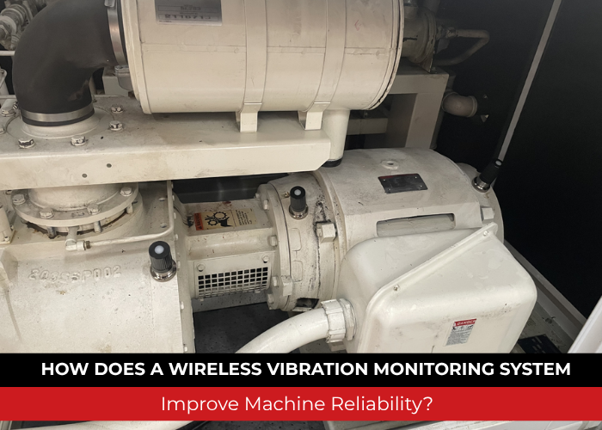
A wireless vibration monitoring system improves machine reliability by showing how equipment changes over time. Instead of checking a machine only after a problem starts, maintenance teams can record normal readings, compare new readings, and spot changes in vibration, acceleration, frequency, and temperature. This gives teams better information for planning maintenance.
Choose the Right Vibration Measurements
A machine can show problems in more than one way. The QI2500 measures four key conditions:
- Vibration velocity
- Acceleration
- Frequency
- Temperature
Vibration velocity shows if overall machine vibration is rising. Acceleration gives more detail about fast machine movement. Frequency shows where vibration is coming from. Temperature adds another useful sign of machine condition. Looking at these readings together gives a clearer picture than using one number alone.
Check Frequency and Sampling Capability
Frequency data is useful when a machine needs a closer look. The QI2500 covers a 0 to 16,000 Hz frequency range. Its sampling rate can be set from 500 Hz to 32 kHz, with 4,096 lines per axis.
High-frequency acceleration and FFT analysis can also support checks for:
- Bearing defects
- Gear-mesh problems
- Other mechanical issues
One compressor case used 8,000 Hz high-resolution sampling to study machine behavior in greater detail.
Look for Reliable Machine Data
A single reading shows what a machine is doing at one moment. A baseline shows what that machine normally looks like. The process starts by recording normal readings. Later readings are then compared with that baseline.
Trend lines make it easier to see if vibration or temperature is moving in a different direction. For example, a sustained 15% rise from baseline can be a reason to inspect the machine. This approach creates a useful machine history instead of a series of unrelated readings.
Consider Mounting and Industrial Durability
A monitoring sensor needs a firm and useful mounting point. The QI2500 supports magnetic mounting and 1/4″-28 threaded mounting. Its magnetic base can be used on flat or curved surfaces. The sensor also has an IP68 rating and operates from -4°F to 140°F.
It uses a 304 stainless-steel base, an HDPE cap, and conformally coated internal electronics. These features support use in demanding industrial areas, including high-humidity environments and food-processing settings.
Evaluate Wireless Access and Data Control
A wireless vibration monitoring system should make data collection easier without adding a large IT task. The QI2500 uses 2.4 GHz Wi-Fi and creates its own access point. A phone or PC can connect directly through a browser.
There is no need for an external network, internet connection, or special app. Data can be downloaded from the sensor and exported for further review. This gives maintenance teams direct control over their machine data.
Match the Sensor to Your Equipment
The best place to start monitoring is equipment where a failure could affect production.
The QI2500 is suited to equipment such as:
- Electric motors and pumps
- Screw compressors and gearboxes
- Fans and conveyors
- Packaging and food-processing machines
It is also designed for 5 to 200 HP motors, continuous-run equipment, and machines that are important to uptime. The sensor can also be used with new equipment. Early readings can show whether a machine is balanced, aligned, and running smoothly.
Look for Practical Machine Monitoring
Good machine condition monitoring follows a clear process:
Select → Mount → Measure → Baseline → Repeat → Download → Review → Compare → Analyze → Act
First, choose the machine. Then mount the sensor and record its normal condition. New readings are collected and compared with earlier data. If a change appears, the team can review frequency and FFT data more closely. This can point toward issues such as:
- Wear or damage
- Imbalance or misalignment
- Mechanical looseness
- Belt or gear problems
- Bearing defects or overheating
The purpose is to support a clear maintenance decision, not just collect more numbers.
Choose an Industrial Vibration Sensor Supplier
Choosing an industrial vibration sensor supplier involves more than checking wireless range. The sensor should fit the equipment, measurement needs, mounting point, and the way the maintenance team works.
The QI200 Remote Wireless Activation Switch adds another option for hard-to-reach equipment. It works with the QI2500 and lets maintenance teams access the sensor from a distance. This can reduce the need for ladders, cables, and repeated trips to difficult areas.
Start Tracking Machine Reliability
QI Dynamics combines vibration and temperature readings with machine baselines, trend data, frequency review, and FFT analysis. The QI2500 gives maintenance teams a practical way to build a history of important equipment.
Choose an industrial vibration sensor supplier that fits your machines and maintenance process. Start with critical equipment, record its normal condition, and use later readings to spot changes and plan the right maintenance action.
FAQs
How does a wireless vibration monitoring system improve reliability?
It records repeatable machine data, creates a baseline, tracks changes, and gives maintenance teams useful vibration, frequency, acceleration, and temperature readings.
What does machine condition monitoring measure?
It measures conditions such as vibration velocity, acceleration, frequency, and temperature to track changes in machine behavior and support maintenance decisions.
Why is FFT useful for machine monitoring?
FFT shows the frequency content of vibration data. It can support checks for bearing defects, gear-mesh issues, and other mechanical problems.
What equipment can vibration sensors monitor?
They can monitor motors, pumps, compressors, gearboxes, fans, conveyors, packaging machines, food-processing equipment, and other industrial rotating equipment.
Recent Posts


